
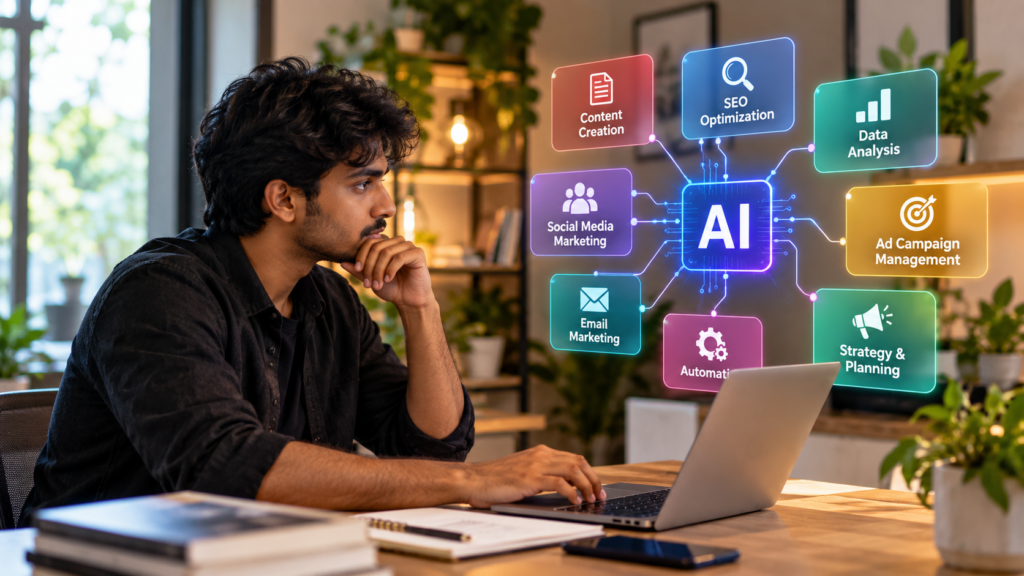
Artificial intelligence (AI) is transforming how businesses approach digital marketing. From creating engaging content and improving search engine rankings to managing social media campaigns and analyzing customer behavior, AI-powered tools are making marketing activities faster, smarter, and more efficient.
Whether you are a digital marketing beginner, freelancer, business owner, or experienced marketer, choosing the best AI tools for digital marketing can help you save time, improve productivity, and make better marketing decisions.
However, with hundreds of AI marketing tools available, finding the right ones can be challenging. Some specialize in content creation, while others focus on SEO, social media management, advertising, or marketing automation.
In this guide, we will explore the 12 best AI tools for digital marketing in 2026, their key features, benefits, and how you can use them to improve your marketing strategy.
What Are AI Tools for Digital Marketing?
AI tools for digital marketing are software applications that use artificial intelligence technologies, including machine learning, natural language processing, and generative AI, to assist with marketing activities.
These tools help marketers automate repetitive tasks, analyze data, generate creative content, and optimize marketing campaigns.
For example, an AI content writing tool can help generate blog outlines, while an AI-powered SEO platform can identify opportunities to improve website content.
Some common applications of AI in digital marketing include:
- Content creation: Generating blog posts, advertisements, emails, and social media captions.
- Search engine optimization: Supporting keyword research, content optimization, and competitor analysis.
- Social media marketing: Creating posts, planning content, and analyzing engagement.
- Email marketing: Personalizing campaigns and improving email communication.
- Paid advertising: Supporting audience targeting, campaign optimization, and ad creative development.
- Marketing analytics: Identifying patterns and insights from campaign performance data.
By combining AI technology with human creativity and strategic thinking, businesses can develop more effective digital marketing campaigns.
12 Best AI Tools for Digital Marketing in 2026
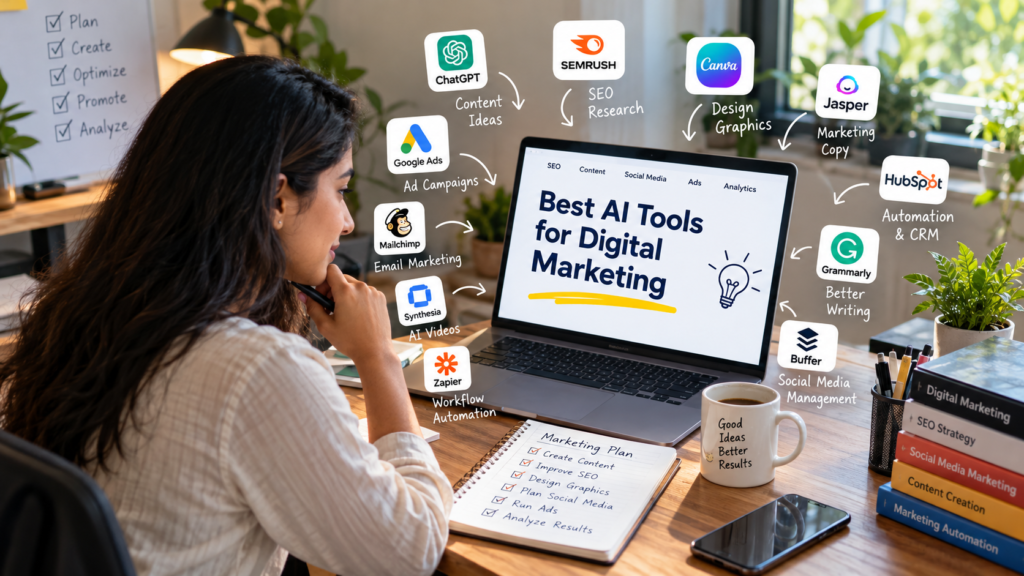
1. ChatGPT – Best for Content Creation and Marketing Ideas
ChatGPT is one of the most versatile AI tools available for digital marketers. Developed by OpenAI, it helps marketers brainstorm ideas, draft content, organize information, and develop marketing strategies.
Digital marketers can use ChatGPT to generate blog outlines, write social media captions, prepare email marketing campaigns, and create advertising copy.
Key Features:
- AI-assisted blog writing and content planning.
- Social media caption and headline generation.
- Email marketing content creation.
- Marketing strategy brainstorming.
- Keyword clustering and content idea generation.
Best For: Content writers, SEO specialists, freelancers, and digital marketing beginners.
Example: A digital marketer can use ChatGPT to develop a 30-day Instagram content calendar for a small business, including post ideas, captions, and calls to action.
ChatGPT is particularly useful for reducing the time spent on brainstorming and preparing first drafts. However, marketers should review AI-generated content for accuracy, originality, and brand relevance.
2. Semrush – Best for SEO and Competitor Analysis
Semrush is a digital marketing platform that provides tools for keyword research, search engine optimization, competitor analysis, and content marketing.
Its AI-powered features help marketers analyze search opportunities, optimize content, and understand competitors’ online visibility.
Key Features:
- Keyword research and keyword difficulty analysis.
- Competitor website analysis.
- Website SEO auditing.
- Content optimization recommendations.
- Backlink analysis and rank tracking.
Best For: SEO specialists, digital marketing agencies, and website owners.
Example: An SEO freelancer can use Semrush to identify relevant keywords, analyze competing websites, and develop an SEO strategy for a client’s business.
Semrush is especially valuable for marketers who want to improve organic search performance through data-driven decisions.
3. Canva – Best for AI-Powered Graphic Design
Canva is a popular online design platform that includes AI-powered creative tools through Canva Magic Studio.
It allows marketers to create professional-looking social media graphics, advertisements, presentations, and promotional materials without requiring advanced graphic design skills.
Key Features:
- AI-assisted design generation.
- Social media post templates.
- AI image generation and editing.
- Presentation and promotional material creation.
- Brand-focused design workflows.
Best For: Social media marketers, content creators, freelancers, and small businesses.
Example: A social media manager can use Canva to create Instagram posts, promotional banners, and Facebook advertisements for a product launch.
Canva helps marketers maintain a consistent visual identity while reducing the time required to produce marketing creatives.
4. Jasper AI – Best for AI Marketing Copywriting
Jasper AI is an AI-powered marketing platform designed to help businesses create and manage marketing content.
Unlike general-purpose writing assistants, Jasper focuses on marketing workflows, brand consistency, and campaign content production.
Key Features:
- AI-assisted blog and article writing.
- Marketing copy generation.
- Brand voice customization.
- Email and advertisement content creation.
- Content workflow and campaign support.
Best For: Content marketing teams, agencies, and businesses producing large volumes of marketing content.
Example: A marketing agency can use Jasper to develop multiple versions of advertising copy while maintaining a consistent brand tone.
Jasper is particularly useful for businesses that require coordinated content across different marketing channels.
5. Surfer SEO – Best for SEO Content Optimization
Surfer SEO is a content optimization platform that helps marketers create and improve search-focused website content.
It analyzes search results and provides recommendations related to content structure, relevant terms, and topic coverage.
Key Features:
- Content optimization suggestions.
- Search results analysis.
- AI-assisted content creation.
- Content structure recommendations.
- On-page SEO guidance.
Best For: SEO content writers, bloggers, and content marketing professionals.
Example: A blogger writing an article about digital marketing strategies can use Surfer SEO to identify important subtopics and improve content relevance.
Although optimization tools provide useful recommendations, high-quality content should always prioritize search intent, accuracy, and reader experience rather than simply achieving a content score.
6. Grammarly – Best for AI Writing Assistance
Grammarly is an AI-powered writing assistant that helps marketers improve grammar, clarity, tone, and overall communication.
It is useful for professionals who regularly create blogs, marketing emails, website content, and business communications.
Key Features:
- Grammar and spelling correction.
- Writing clarity suggestions.
- Tone adjustment.
- AI-assisted rewriting.
- Professional communication support.
Best For: Bloggers, copywriters, email marketers, and digital marketing professionals.
Example: An email marketer can use Grammarly to improve the clarity and professionalism of a promotional email before sending it to customers.
Grammarly helps make marketing content easier to read and understand, improving the overall quality of written communication.
7. HubSpot – Best for Marketing Automation and CRM
HubSpot is a customer relationship management and marketing platform that provides AI-powered capabilities through its Breeze AI tools.
It helps businesses organize customer information, manage leads, automate marketing activities, and improve customer engagement.
Key Features:
- Customer relationship management.
- AI-assisted content and customer insights.
- Email marketing automation.
- Lead management and nurturing.
- Marketing campaign reporting.
Best For: Businesses, marketing agencies, and lead generation teams.
Example: A service-based business can use HubSpot to organize website leads, automate follow-up emails, and monitor customer interactions.
HubSpot is particularly valuable for businesses that want to connect their marketing activities with sales and customer relationship management.
8. Buffer – Best for AI Social Media Management
Buffer is a social media management platform that helps marketers plan, schedule, and analyze social media content.
Its AI Assistant supports content ideation and writing, making it easier to prepare posts for different social media platforms.
Key Features:
- AI-assisted social media content creation.
- Social media scheduling.
- Content calendar management.
- Post performance analytics.
- Multi-platform publishing workflows.
Best For: Social media managers, freelancers, and small business owners.
Example: A digital marketing freelancer can use Buffer to plan and schedule a week’s social media content for multiple clients.
Buffer is useful for maintaining posting consistency and reducing the manual effort involved in managing social media accounts.
9. Google Ads Performance Max – Best for AI-Powered Advertising
Google Ads Performance Max is an AI-powered campaign type that helps advertisers reach potential customers across Google’s advertising channels.
It uses machine learning to support bidding, audience matching, and advertisement delivery based on campaign objectives.
Key Features:
- Automated bidding optimization.
- AI-assisted advertisement delivery.
- Audience signal support.
- Multi-channel advertising.
- Conversion-focused campaign optimization.
Best For: PPC specialists, e-commerce businesses, and performance marketers.
Example: An online store can use Performance Max campaigns to promote products across eligible Google advertising placements while optimizing toward sales goals.
However, advertisers still need accurate conversion tracking, suitable creative assets, and regular performance reviews to achieve effective results.
10. Mailchimp – Best for AI Email Marketing
Mailchimp is an email marketing platform that offers automation, audience segmentation, and AI-assisted marketing capabilities.
It helps businesses communicate with customers through personalized email campaigns and automated marketing workflows.
Key Features:
- Email campaign creation.
- Audience segmentation.
- Automated customer journeys.
- AI-assisted content suggestions.
- Campaign performance reporting.
Best For: Small businesses, e-commerce brands, and email marketing professionals.
Example: An e-commerce business can use Mailchimp to send welcome emails, promotional offers, and follow-up messages based on customer behavior.
Mailchimp can help businesses build stronger customer relationships through consistent and relevant email communication.
11. Synthesia – Best for AI Video Creation
Synthesia is an AI video generation platform that enables businesses to create videos using digital avatars and AI-generated voiceovers.
It can be useful for producing educational content, product explanations, and business presentations.
Key Features:
- AI avatar video creation.
- Text-to-video workflows.
- AI-generated voiceovers.
- Multilingual video production.
- Video templates and editing tools.
Best For: Video marketers, training teams, and content creators.
Example: A digital marketing agency can create a short educational video explaining the benefits of SEO without organizing a traditional video shoot.
Synthesia is especially useful for structured informational videos, although original footage may be preferable when authenticity and real customer experiences are essential.
12. Zapier – Best for AI Marketing Workflow Automation
Zapier is an automation platform that connects different applications and helps businesses automate repetitive workflows.
Its AI capabilities can assist with processing information, generating content, and creating automated workflows between marketing tools.
Key Features:
- Application integrations.
- Automated lead management.
- AI-assisted workflow creation.
- Data transfer between marketing platforms.
- Repetitive task automation.
Best For: Digital marketing agencies, freelancers, and businesses managing multiple software applications.
Example: A business can create an automated workflow that captures leads from a website form, adds them to a CRM, and sends an internal notification.
Zapier is valuable for improving operational efficiency and reducing manual data entry.
How to Choose the Best AI Tools for Digital Marketing
Choosing the right AI marketing tools depends on your business goals, budget, technical knowledge, and marketing requirements.
1. Identify your marketing goals
Determine whether your priority is improving SEO, creating content, managing social media, generating leads, or automating marketing activities.
2. Evaluate available features
Compare tools based on the features you actually need. Avoid paying for advanced capabilities that do not support your current marketing strategy.
3. Consider your budget
Many AI tools offer free access, limited plans, or trial options. Start with essential tools before investing in multiple paid subscriptions.
4. Check ease of use
Choose tools that match your experience level and integrate smoothly into your existing workflow.
5. Measure performance
Evaluate whether a tool saves time, improves content quality, reduces operational costs, or contributes to measurable marketing results.
Benefits of Using AI Tools in Digital Marketing
AI-powered marketing tools offer several advantages for businesses and marketing professionals.
Improved productivity: AI can reduce the time required for content drafting, reporting, research, and repetitive administrative tasks.
Better content planning: AI tools can support topic research, audience analysis, and the development of organized content strategies.
Enhanced personalization: AI-assisted segmentation and automation can help businesses deliver more relevant messages to different customer groups.
Data-driven decisions: AI-powered analytics can help marketers identify patterns and opportunities within campaign performance data.
Greater scalability: Marketing teams can manage larger content calendars and more complex workflows without increasing manual work at the same rate.
Despite these benefits, AI tools are not substitutes for human expertise. Successful digital marketing still requires creativity, strategic planning, accurate information, and an understanding of customer needs.
Conclusion
Artificial intelligence has become an important part of modern digital marketing. From SEO and content creation to social media management, paid advertising, and marketing automation, AI-powered tools help businesses work more efficiently.
The best AI tools for digital marketing are those that support your specific business goals and improve your existing marketing processes.
Beginners can start with accessible tools such as ChatGPT, Canva, and Grammarly, while experienced marketers may benefit from specialized platforms such as Semrush, Jasper, HubSpot, and Zapier.
Ultimately, successful digital marketing requires the right combination of AI technology, human creativity, and strategic decision-making.
By choosing suitable AI tools and using them responsibly, businesses and digital marketing professionals can build more efficient workflows, create valuable content, and strengthen their online marketing efforts.