
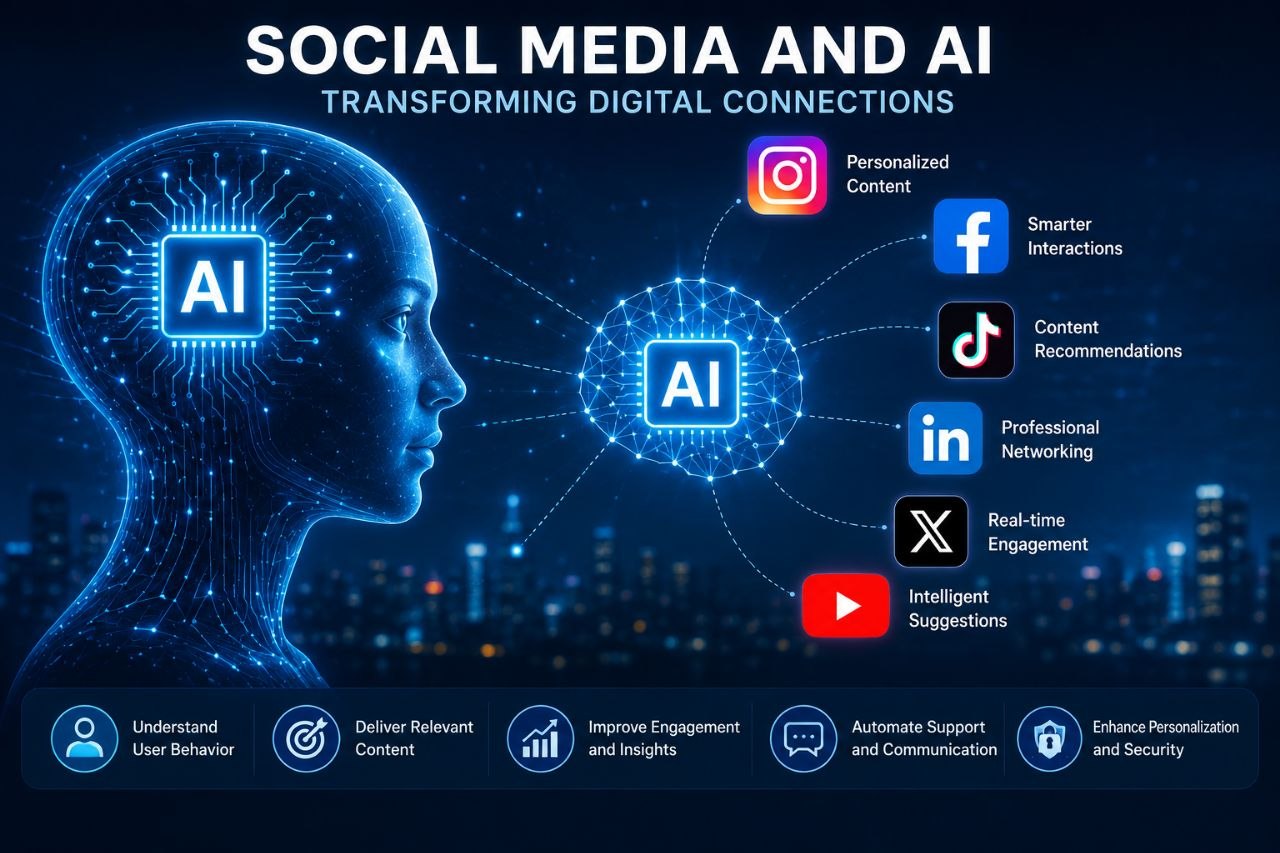
Digital networking platforms now play a vital role in how people communicate and connect with one another. From sharing personal experiences to promoting brands and businesses, platforms such as Instagram, Facebook, LinkedIn, TikTok, X, and YouTube influence how people connect and interact online. At the same time, Artificial Intelligence (AI) is changing the way digital technologies operate, making them more intelligent, efficient, and personalized.
The relationship between Social Media and AI is transforming the digital landscape. Artificial intelligence is no longer a separate technology working in the background; it has become a core component of social platforms. Whether it is recommending content, analyzing user behavior, automating customer service, or improving advertising performance, AI plays a significant role in shaping online experiences.
For businesses, marketers, and content creators, understanding how Social Media and AI work together is increasingly important. As technology continues to evolve, organizations that effectively leverage AI-driven tools can improve engagement, streamline operations, and make more informed decisions. This article explores the growing influence of AI in social media, its benefits, challenges, and future opportunities.
Understanding AI in Social Media
Artificial Intelligence refers to computer systems that can perform tasks commonly associated with human intelligence. Their capabilities involve processing information, detecting patterns, comprehending human language, and predicting potential outcomes.
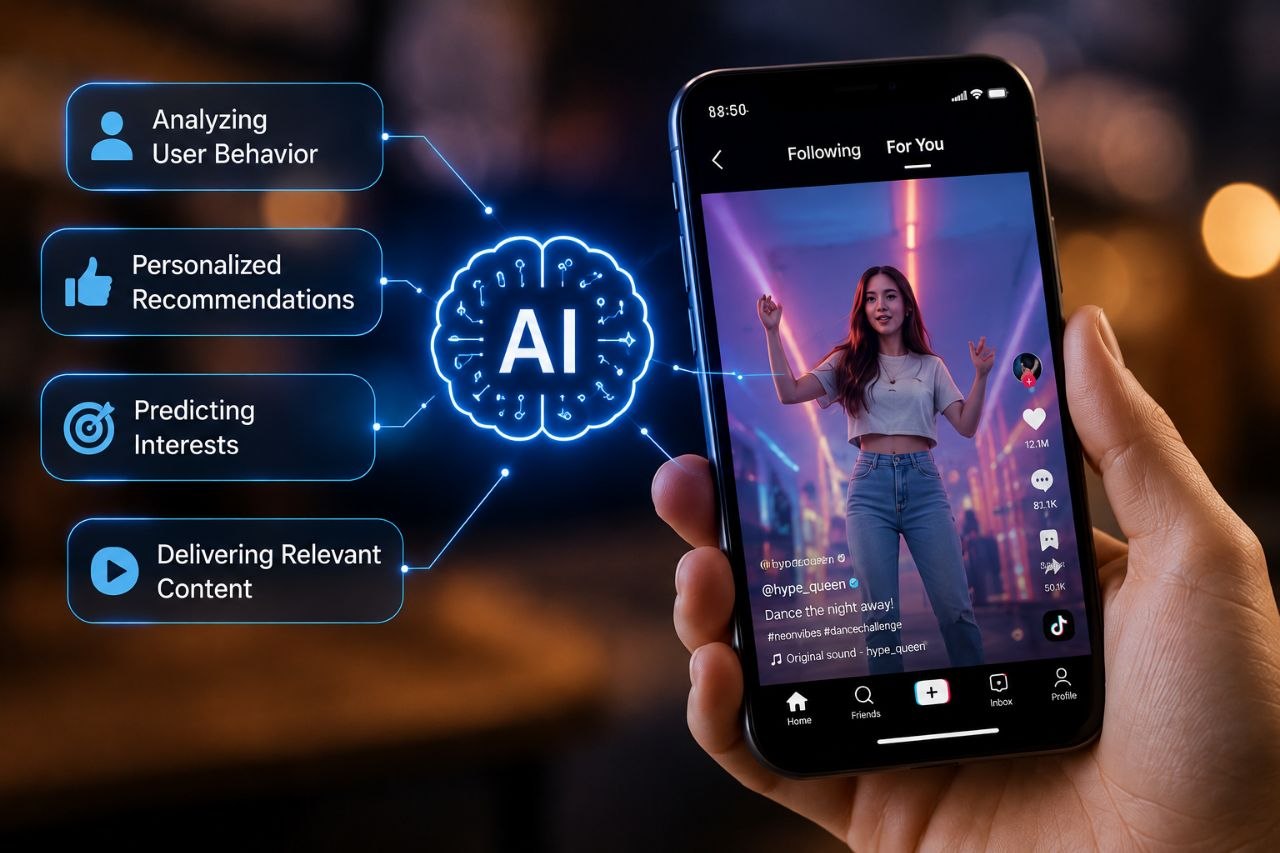
In social media environments, AI processes enormous volumes of data generated by users every second. Every like, comment, share, search, and video view contributes valuable information that helps platforms understand user preferences. Using machine learning algorithms, AI identifies patterns and predicts the type of content users are most likely to engage with.
For example, when YouTube suggests videos related to your interests or TikTok displays personalized content on the “For You” page, artificial intelligence is responsible for those recommendations. This ability to deliver relevant content has become one of the most important aspects of Social Media and AI integration.
How AI Is Changing Social Media Platforms
Personalized Content Recommendations
One of the most noticeable applications of AI is content personalization. Social media platforms use sophisticated algorithms to analyze user behavior and recommend content that aligns with individual interests.
These systems evaluate various factors, including:
- Previous interactions
- Viewing habits
- Search history
- Engagement patterns
- Preferred content formats
As a result, users receive a highly customized experience that keeps them engaged for longer periods. Personalization benefits both users and businesses because relevant content is more likely to attract attention and encourage interaction.
AI-Powered Customer Support
Customer support operations have become more efficient with the integration of AI-driven chatbot technology. Organizations increasingly utilize automated communication solutions on messaging platforms to deliver immediate assistance to customers.
Unlike traditional support systems that require human agents for every interaction, AI chatbots can handle multiple conversations simultaneously. They can answer frequently asked questions, provide product information, assist with purchases, and guide users through common processes.
Key benefits include:
- Faster response times
- Reduced operational costs
- Improved customer satisfaction
- Round-the-clock support
- Better lead generation opportunities
While chatbots cannot completely replace human interaction, they help businesses deliver efficient support while freeing staff to handle more complex issues.
AI in Social Media Marketing
The combination of Social Media and AI has created new opportunities for digital marketing. AI-powered analytics tools help marketers understand audience behavior, measure campaign performance, and identify emerging trends.
Modern advertising platforms rely heavily on machine learning to improve targeting accuracy. Instead of showing advertisements to broad audiences, AI helps businesses reach users who are more likely to be interested in specific products or services.
AI can assist marketers by:
- Identifying ideal customer segments
- Predicting consumer behavior
- Optimizing advertising campaigns
- Improving conversion rates
- Measuring campaign effectiveness
These capabilities allow businesses to allocate resources more efficiently and achieve stronger marketing outcomes.
AI-Assisted Content Creation
Content creation is another area where artificial intelligence is making a significant impact. Businesses and creators increasingly use AI-powered tools to generate ideas, write captions, edit videos, design graphics, and schedule posts.
Some common applications include:
- Caption generation
- Content planning
- Video editing assistance
- Image enhancement
- Hashtag recommendations
- Content scheduling
These tools help save time and improve productivity. However, human creativity remains essential. While AI can assist with content production, authentic storytelling and emotional connection still depend on human input.
Social Listening and Sentiment Analysis
Social media provides companies with a vast amount of user-generated feedback that can help improve products and services. . AI enables organizations to monitor online conversations and gain insights into public opinion through a process known as social listening.
Sentiment analysis technology examines online comments, reviews, and conversations to identify whether audience opinions are favorable, unfavorable, or neutral. This information helps companies understand how customers feel about their products, services, and brand reputation.
Businesses use social listening to:
- Track customer sentiment
- Monitor brand reputation
- Identify emerging trends
- Analyze competitor activity
- Improve customer experiences
Understanding customer feedback in real time allows businesses to resolve concerns efficiently and guide their strategies with greater accuracy.
Benefits of Social Media and AI
The integration of Social Media and AI offers several advantages for both users and businesses.
Enhanced User Experience
AI enables platforms to provide more relevant and personalized experiences. Users spend less time searching for content and more time engaging with information that matches their interests.
Improved Marketing Efficiency
Businesses can use AI-powered insights to develop more effective campaigns and reach the right audience at the right time.
Increased Productivity
Automation helps minimize the amount of repetitive work that would otherwise require manual effort. Activities such as scheduling posts, analyzing performance data, and responding to routine inquiries can be managed more efficiently.
Better Customer Engagement
Through personalized recommendations and automated communication, businesses can maintain stronger relationships with their audiences.
Data-Driven Decision Making
AI-generated insights help organizations make informed decisions based on real user behavior rather than assumptions.
Challenges and Concerns
Despite its advantages, the growing use of AI in social media also presents several challenges.
Privacy and Data Security
AI-driven systems use customer data extensively to provide tailored content and recommendations. . As a result, concerns about privacy and data protection continue to grow.
Users want greater transparency regarding how their information is collected, stored, and used. Businesses and social media platforms must prioritize ethical data practices and comply with privacy regulations.
Spread of Misinformation
AI algorithms often prioritize content that generates high levels of engagement. Unfortunately, sensational or misleading content can sometimes attract significant attention.
This can contribute to the rapid spread of misinformation, fake news, and manipulated media. The rise of deepfake technology has further increased concerns about digital authenticity.
Reduced Human Interaction
As automation becomes more common, some users worry that social media interactions may feel less personal. Excessive reliance on automated responses and AI-generated content can reduce the authenticity that people value in online communication.
Dependence on Algorithms
Content creators and businesses often depend heavily on platform algorithms for visibility. Changes to these algorithms can significantly impact reach and engagement, creating uncertainty for brands and creators alike.
The Future of Social Media and AI
The future of Social Media and AI is expected to bring even more innovation. As digital technologies continue to evolve, social networks will likely become more advanced, responsive, and interactive.
Various innovations are poised to play a significant role in shaping future online experiences.
AI-Generated Virtual Influencers
Digital personalities created using artificial intelligence are already attracting large audiences and collaborating with brands.
Advanced Personalization
Future systems may deliver content recommendations based not only on behavior but also on user preferences, interests, and contextual factors.
Smarter Video Creation Tools
AI-powered editing, voice generation, and video production tools will continue to simplify content creation.
Augmented Reality Integration
Social platforms are increasingly combining AI with augmented reality to create immersive experiences, virtual try-ons, and interactive shopping features.
More Accurate Advertising
Advertising technologies will become more sophisticated, helping businesses deliver highly relevant messages to the right audiences.
Conclusion
The connection between Social Media and AI is reshaping the way people communicate, discover information, and engage with brands online. Artificial intelligence has become a driving force behind content recommendations, customer support, marketing strategies, and audience insights.
For businesses, AI offers opportunities to improve efficiency, strengthen customer relationships, and make smarter decisions. For users, it creates more personalized and engaging digital experiences. At the same time, organizations must address challenges related to privacy, misinformation, and ethical technology use. The most successful businesses will be those that combine the efficiency of AI with authentic human creativity and communication. As the digital world continues to evolve, Social Media and AI will remain closely connected, influencing the future of online interaction, marketing, and content creation for years to come.
Author : Sandeep A S